

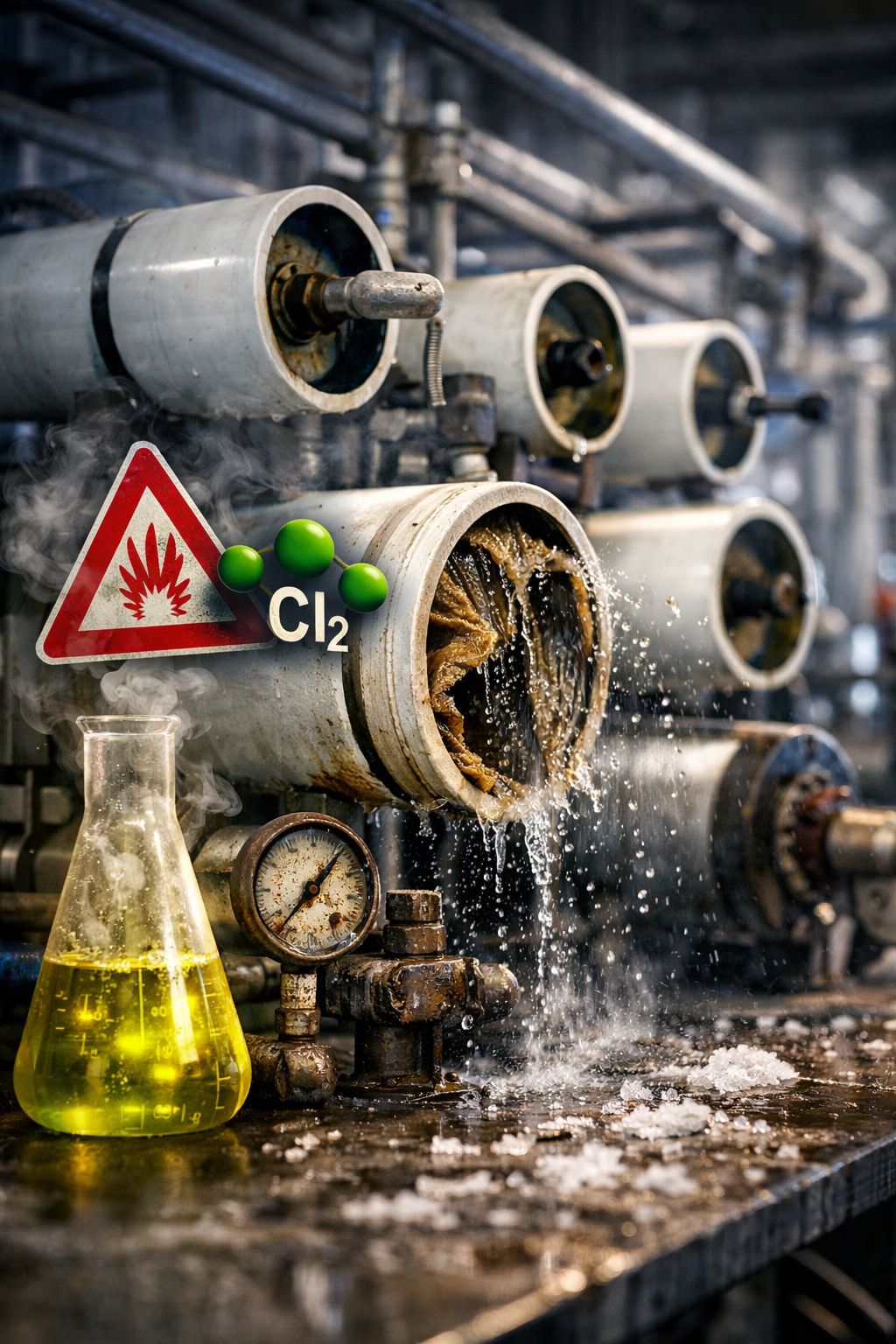
Chlorine: The Most Critical Threat to RO Membranes
Chlorine is often underestimated due to its typically low concentration in water systems. However, it is one of the most harmful substances that reverse osmosis (RO) membranes can be exposed to.
RO membranes are commonly made of polyamide, a material highly sensitive to oxidation. When exposed to chlorine, an oxidative attack occurs, breaking the chemical bonds within the membrane structure. This results in permanent and irreversible damage.
Such damage cannot be corrected through cleaning procedures, including Clean-in-Place (CIP), or any operational adjustments.
Risk Levels by Concentration:
• ≤ 0.01 ppm: Near-zero level; relatively safe for very short exposure only
• 0.02 – 0.05 ppm: بداية gradual, often unnoticed degradation
• 0.1 ppm: Noticeable membrane damage within days
• ≥ 0.5 ppm: Rapid and severe membrane destruction
There is no truly “safe” chlorine concentration over the long term. Exposure time plays a critical role:
• Low concentration over extended periods leads to gradual internal degradation
• High concentration over short periods causes sudden performance failure
One of the key challenges is that chlorine damage is not always immediately visible, but manifests later as unexpected system performance decline.
Typical Indicators of Chlorine Damage:
• Increased permeate conductivity
• Reduced salt rejection
• No visible fouling
• No improvement after CIP
In such cases, the system may appear mechanically sound while suffering from internal chemical degradation.
Warning Signs Requiring Immediate Attention:
• Sudden rise in permeate conductivity
• Performance decline without evidence of fouling
• Inconsistent performance among membranes within the same stage
• Early issues despite relatively new membranes
It is important to distinguish chlorine damage from fouling mechanisms. Chlorine does not cause scaling, biofouling, or organic fouling; instead, it directly damages the membrane structure.